Bible crossword puzzle: Leviticus, Numbers, and Deuteronomy
TL;DR:
This crossword draws on textbook material about the Bible books of Leviticus and Deuteronomy. Topics covered in the book include the significance of sacrifices and offerings, the Shema, the theology of blessings and curses, holiness, covenant renewal, and the negative and positive aspects of Israel in the wilderness.
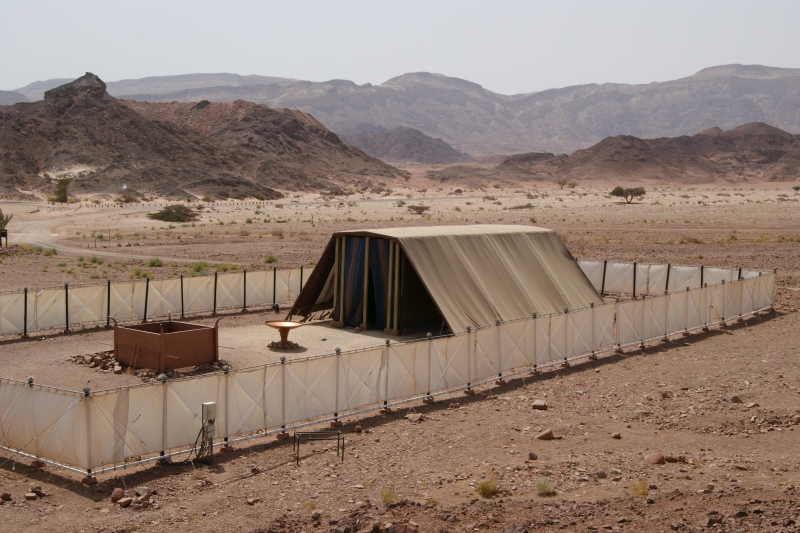
Model of the Tabernacle in Timna Park, Israel | Image Source
Based on material in chapter 6 of Discovering the Bible by Alex Varughese
Challenge: Can you solve this puzzle even if you do not have the book by Varughese?
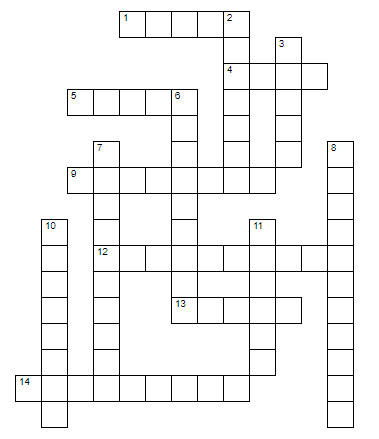
ACROSS
1 Moses' brother to whom some of God's speeches in Leviticus are addressed
because this man had been consecrated and ordained as a priest
4 An area where the book of Numbers reports that the Israelites camped at the end
of their trip through the wilderness. It was there that they worshiped Baal and engaged in the Canaanite
fertility cult.
5 A passage from Deuteronomy that was part of Judaism's morning and evening
prayers. It begins, "The Lord our God, the Lord is one"
9 An important theme in Leviticus; this theme reflects the Law's insistence that
human beings are to "love your neighbor as yourself," as well as the need to be consecrated to
God in ways that separate oneself from the secular influences of the world
12 When the Israelites camped in the wilderness, they pitched their tents so that
they always faced this particular structure to symbolize their God-centeredness
13 A word usually translated as "law," which really means God's instructions for human life and conduct
14 The Bible book that can be seen as an instruction manual for Israel's
priests
DOWN
2 A document or "book" that tells of Israel's murmuring and rebellion against God
as the people coped with the difficulties of life in the desert wilderness
3 One of two spies who presented a favorable report on the possibility of entering
the Promised Land
6 A word that carries the idea of the "covering" of sin by the blood as well as the
idea of cleansing from sin
7 The starting point of Israel's walk with God as a holy people
8 A compilation of Moses' farewell speeches that help the people remember their
past; the title actually means "second law," reflecting this Bible book's summing up of the essence of the law that God gave to Israel at Mount Sinai
10 The Jewish feast that celebrated Israel's redemption from Egyptian slavery
11 A magician and seer who was recruited by Balak, king of Moab, to pronounce a curse on Israel (he is also known as the man with the talking donkey)
This crossword puzzle was created for use in the course Introduction to Biblical Literature. The words and clues come from the textbook Discovering the Bible: Story and Faith of the Biblical Communities edited by Alex Varughese and published by what is now called The Foundry.
Leviticus, Numbers, and Deuteronomy are key books of the Hebrew Bible. They are part of the Torah or Pentateuch, the five foundational documents of Judaism. Leviticus focuses on religious rituals, laws, and purity codes. It reflects the concerns of a community trying to maintain its identity and religious practices during periods of exile and return. Numbers describes the Israelites' trip from Sinai to the borders of the Promised Land. This book can speak to us about faith, obedience, and divine guidance while also helping us grapple with issues of leadership and rebellion. Deuteronomy is often considered a theological and legal manifesto. The series of speeches by Moses urges the Israelites to remain faithful to their covenant with God as they prepare to enter the land of Canaan. Together, Leviticus, Numbers, and Deuteronomy give us insight into the social, religious, and political dynamics of ancient Israelite society. The three books were a guide for the Jewish people for hundreds of years.