More classic art masterpieces used as illustrations
TL;DR:
The Prodigal Son (Luke 15) has an older brother who becomes a “wet blanket” during his younger sibling’s welcome-home celebration. While the father models joyful grace and forgiveness, the elder son resents the party and winds up embodying self-righteousness, jealousy, and an unforgiving spirit.
15 21 "The son said to him, 'Father, I have sinned against heaven and against you. I am no longer worthy to be called your son.'
22 "But the father said to his servants, 'Quick! Bring the best robe and put it on him. Put a ring on his finger and sandals on his feet. 23 Bring the fattened calf and kill it. Let's have a feast and celebrate. 24 For this son of mine was dead and is alive again; he was lost and is found.' So they began to celebrate.
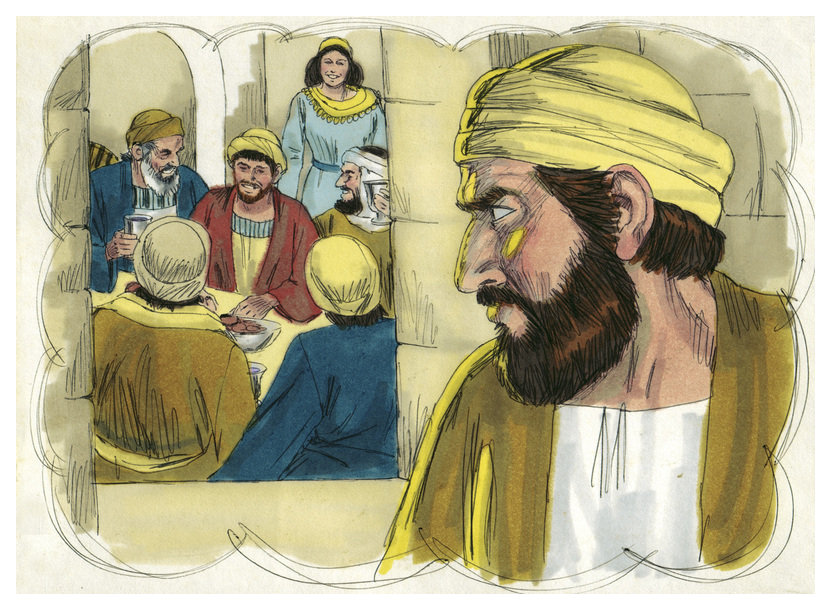
25 "Meanwhile, the older son was in the field. When he came near the house, he heard music and dancing. 26 So he called one of the servants and asked him what was going on. 27 'Your brother has come,' he replied, 'and your father has killed the fattened calf because he has him back safe and sound.'
28 "The older brother became angry and refused to go in. So his father went out and pleaded with him. 29 But he answered his father, 'Look! All these years I've been slaving for you and never disobeyed your orders. Yet you never gave me even a young goat so I could celebrate with my friends. 30 But when this son of yours who has squandered your property with prostitutes comes home, you kill the fattened calf for him!'
31 "'My son,' the father said, 'you are always with me, and everything I have is yours. 32 But we had to celebrate and be glad, because this brother of yours was dead and is alive again; he was lost and is found.'"
The tragic story would have a happy ending after all. The prodigal son returned home, repentant. A celebration was called for. Jesus says that a homecoming banquet was arranged. It was a time for rejoicing in the life of a family whose wayward son had come home.
But then, just as the festivities were getting underway, the older brother of the prodigal son arrived to play the ignoble part of the wet blanket, which is another way of saying killjoy or party-pooper (meaning less-than-enthusiastic). The figure of speech comes from the fire-fighting strategy of using a water-soaked to put out small fires. Unwilling to forgive his brother and jealous of the attention being showered on his sibling, this older brother feels he is owed some payment for his ethical and moral stability and superiority.
Those listening to the story unfold hear that happy ending turn sour.
There is a reason, of course, why Jesus includes the part of the older brother in the story of the prodigal son. He includes this wet blanket to do far more than add interest to the story. There is scarcely a fault more common than jealousy or the begrudging of good to those we deem less deserving than we think we are. It is entirely possible that the story of this elder brother is a mirror through which we will discover ourselves.
Among the many lessons to be learned from the prodigal son's story is the one that it is not enough merely to have "stayed with the supplies" (a phrase from 1 Samuel 25:13 and 30:24). The attitude with which you did it counts as well. Jesus seems to hone on attitudes as much or more than actions.
When forgiveness is based on repentance, there should not be any wet blankets in the church. We must be willing to accept all those who repent and receive God's forgiveness as brothers and sisters. And we must do so joyfully unless we want to find ourselves playing the role of the older brother.
That kind of acceptance doesn't always come easy. Sometimes, repentant sinners include prodigal sons who were once a part of the family. They left the family of God for the world's pleasures, and on their return, we find ourselves being pushed into the shadows. We are the ones who stood by the stuff. What's all the excitement over them?
Quite some time ago, I saw a car bearing a bumper sticker proclaiming: "Christians aren't perfect, just forgiven."
That's not a bad theme to use with the story of the prodigal son. We Wesleyan-Arminians might want to argue a bit with some possible theological overtones of this exact wording. But still, it does say something good about what we believe -- and ought -- to practice concerning forgiveness.
Those who expect God's forgiveness must themselves be willing to forgive. That's also part of what the Lord's prayer is saying to us. [ Thoughts on the Lord's prayer ]
The Palm Sunday / Easter Sunday season gives plenty of material for celebration; maybe this is even a time for celebrating some prodigals returned to the family. Let's have no elder brothers in our midst today. Such an unforgiving spirit will rob you of the joy that should be yours on this Lord's Day.
Let's not have any wet blankets today. Let's shout hallelujah and rejoice together in God's great forgiving grace toward repentant sinners!
I wrote this devotional blog while Barbara and I were serving as missionaries in Italy. They originally appeared in Standard, a weekly Faith Connections take-home curriculum piece for adult Sunday school classes published by The Foundry.
*Note: The expression "wet blanket" started in the USA in the early 1800s. There were no fire extinguishers in homes, and there was no 911 to call. When fires started in homes, people would frequently grab a blanket, plunge into an animal watering trough, and throw it on a fire to put it out. The combination of wetness and the smothering effect would sometimes put out the fire. "A wet blanket" came to mean someone who smothers excitement and puts out the "fire" in a gathering of people. Words with similar meanings include killjoy and party-pooper.
-- Howard Culbertson, hculbert@snu.edu
The elder brother's actions in Jesus' parable of the Prodigal Son communicate at least four attitudes and themes that are not Christ-like. Those are resentment, self-righteousness, and strong opposition to forgiveness and reconciliation.


